Buy It Again: Five Stories That Earn Their Place in Every Format You Own

Photo: Brian Jeffery Beggerly from S'pore, Singapore, CC BY 2.0, via Wikimedia Commons
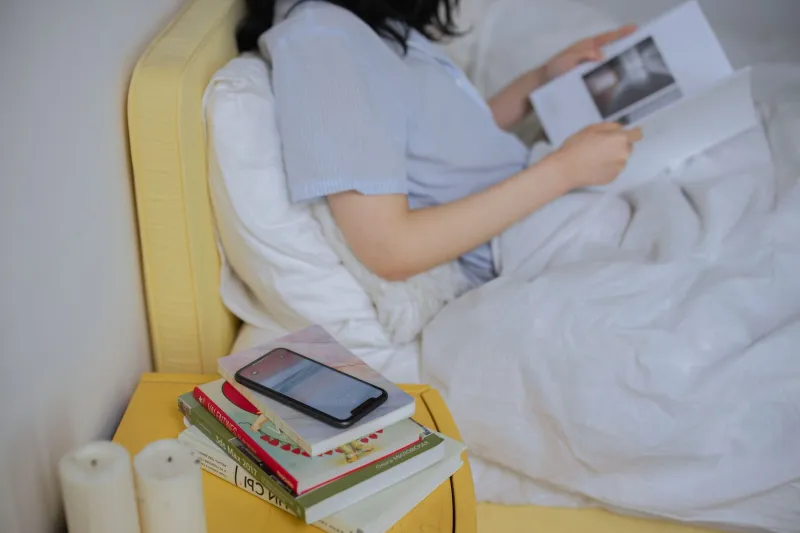
Somewhere along the way, I stopped feeling embarrassed about owning the same book three times. Print for the margins. Audio for the commute. E-book for the 2 a.m. can't-sleep, need-to-check-one-thing impulse. It's not hoarding; it's a reading habit with multiple doors into the same house.
Because here's the thing nobody says out loud: format isn't neutral. The same story reads differently when it's performed, differently again when it's searchable, differently still when you can scribble in it. Some books don't survive that shuffle. Others get better — each version revealing something the others kept hidden.
These five are the ones that earned the shelf space, the Audible credit, and the Kindle download.
1. The World According to Garp by John Irving
Print is the right home for Irving's long, looping novel — you want to flip back, to check on the details he plants a hundred pages ahead. But the audiobook exposes something else: Irving's sentences have a comic rhythm that your inner voice can't quite land. Read aloud, the tragicomic timing snaps into place. E-book wins for the foreshadowing — search a name and watch the novel's architecture appear.
2. Just Kids by Patti Smith
The print edition matters here as an object — Smith is a visual artist, and the photographs belong on paper, in your hands, unhurried. But the audiobook, narrated by Smith herself, is the rarer treasure: a poet reading her own elegy for Robert Mapplethorpe and New York City. Her flat, deliberate delivery does something no interior voice can. Keep the print copy for the images; keep the audio for the voice.
3. Project Hail Mary by Andy Weir
This is the one I hand to audiobook skeptics. The novel's central relationship involves a character who communicates in musical tones — and the audio production actually sings them. It's the rare case where the audio isn't a substitute for the text but a fuller version of it. The e-book earns its keep with the math: Weir's problem-solving sequences are far easier when you can scroll back to check a figure. Print for the collection, audio for the experience, e-book for the science.
4. Beloved by Toni Morrison
Morrison's prose is famously musical, but Beloved on audio reveals how much of the book is structured like spoken testimony — voices interrupting, overlapping, refusing linear time. The print edition is essential for a different reason: this is a book that rewards annotation, and its repetitions only register fully when you can see them on facing pages. The e-book is the one I'd skip, honestly — some books want to be touched. Owning two formats of Beloved isn't excess. It's the minimum.
5. Infinite Jest by David Foster Wallace
The obvious joke is that nobody finishes it, so let me make the practical case instead. The print copy is non-negotiable because the endnotes are half the novel — you need them physically present, flipping, the way Wallace intended the disruption to feel. But the e-book solves the book's oldest problem: tapping a linked endnote instead of drowning in two bookmarks. And the audiobook? Surprisingly, it works — hearing the prose in different voices untangles the rotating cast of the Enfield Tennis Academy better than any character list ever could.
The Real Argument
None of this is about consumption. It's about access. A book you love in one format is a book you can visit in one mood. A book you own in three is a book that meets you wherever you actually are — stuck in traffic, lying awake, sitting on the porch with a pencil.
So yes, buy it twice. Some stories are worth the shelf space, the battery life, and the commute, all at once. Your wallet will recover. The reread is worth it.