More Story, Less Magic: What Happens When Authors Can't Let a Good Ending Stay Good

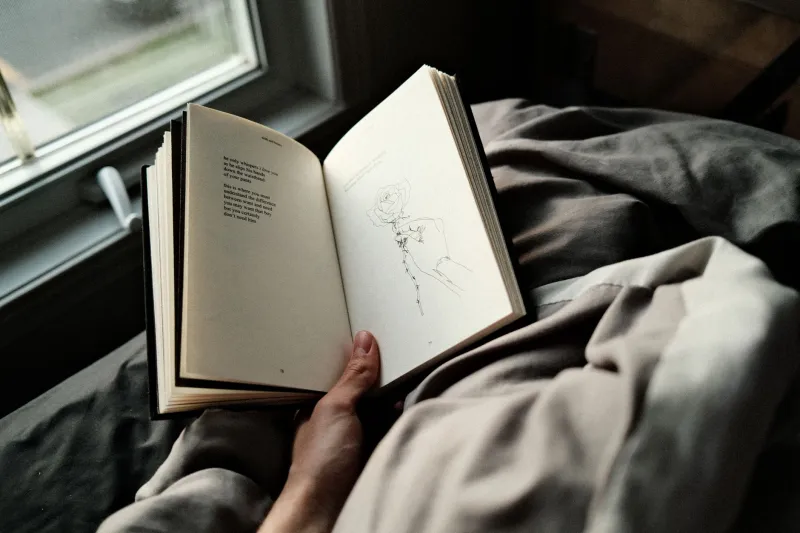
Photo by Photo by Gabriel Cox on Unsplash on Unsplash
There's a specific kind of disappointment that hits differently than a bad book. It's not the one where a story fails to deliver — it's the one where a story already delivered, beautifully, completely, and then someone decided to keep going anyway.
We've all been there. You finish a novel that lands exactly the way it should. The final chapter closes with that rare combination of resolution and resonance. You sit with it for a minute. Maybe two. And then, six months later, there's an announcement: a sequel is coming. And something in your chest does this complicated little drop.
So why does it keep happening? And more importantly — does continuing a finished story always mean ruining it?
The Ending That Wasn't Really an Ending
Let's be fair here. Not every sequel is a creative betrayal. Some stories that feel complete on the surface are actually just pausing. A first novel can establish a world so rich, so densely populated with possibility, that one book was never going to be enough. The ending felt satisfying because the author knew how to write a satisfying chapter break — not because the story was actually over.
Fantasy and science fiction series have been doing this forever. Readers expect it. The genre practically runs on the promise of more. Nobody finishes the first installment of a sprawling epic and thinks the author is done. The contract between writer and reader is clear from page one.
But then there's the other kind of story. The standalone. The literary novel that was never pitched as part of anything. The thriller that wrapped up its mystery with no loose threads left dangling. These are the books where a sequel announcement feels less like a continuation and more like a revision — like the author is quietly saying, actually, I wasn't quite finished.
The Commercial Pull Is Real (And Honest People Admit It)
Here's the part that's uncomfortable to say out loud: publishing is a business. A successful standalone novel creates a proven audience, and a proven audience is something publishers want to sell to again. The pressure to return to a beloved world isn't always subtle. Sometimes it's a contract. Sometimes it's an advance that's hard to walk away from. Sometimes it's an agent reminding an author that their next book will have an easier path to market if it has a familiar name attached.
None of that makes the resulting book bad by default. But it does mean that some sequels are born from commercial logic first and creative necessity second — and readers can often feel that, even if they can't always name it.
The books that suffer most from this dynamic tend to share a few common traits: the stakes feel artificially inflated, previously resolved character arcs get quietly undone to manufacture new conflict, and the prose loses that specific urgency that made the original feel alive. You're reading the same author, technically. But something in the engine is different.
When the Author Actually Has Something to Say
The flip side of all this is that some of the best books ever written are sequels to stories that felt finished. Toni Morrison's work returned repeatedly to intersecting themes and sometimes even characters across novels that each stood alone — and each one had something to add. The continuation didn't dilute the original; it deepened it.
The difference, when you look closely, tends to come down to one question: Did the author discover something new, or did they just return to something familiar?
A worthy continuation usually has a reason to exist that goes beyond satisfying demand. The author found an angle they hadn't explored. A character who deserved more time. A theme that the first book raised but couldn't fully resolve. There's a sense of genuine creative pressure behind the story — the feeling that the writer needed to go back, not just chose to.
When that pressure is absent, readers feel it. The book moves. The plot advances. But nothing is at stake in the way it once was, because the original story already spent its emotional currency.
The Nostalgia Trap
There's also something worth naming about what readers actually want when they ask for more. Because sometimes when we say we want a sequel, what we really mean is that we want to feel the way the first book made us feel. We want to go back. We want that specific emotional experience again, wrapped in familiar characters and the world we already love.
The problem is that's not really a story request. It's a nostalgia request. And nostalgia is almost impossible to write toward directly without producing something hollow.
The best authors seem to understand this intuitively. They know that trying to recreate the feeling of the first book is a trap. The only way to honor what the original did is to do something genuinely new — even if that newness feels risky, even if it's not what the loudest voices in the fan community are asking for.
The worst sequels are the ones that try hardest to be the first book again. They hit the same emotional beats. They reassemble the same character dynamics. They mistake familiarity for depth. And readers who loved the original can usually feel, somewhere around chapter four, that they've been handed a very expensive imitation of the thing they actually wanted.
So Does More Story Mean Less Magic?
Not always. But often enough that it's worth being honest about the pattern.
The stories that survive their own sequels tend to be the ones where the author had genuine creative unfinished business — where the continuation was driven by curiosity and necessity rather than market logic or reader pressure. Those books add something. They change how you see the original. They justify their own existence.
Everything else is a gamble. Sometimes a lucky one. Sometimes not.
Maybe the most useful thing a reader can do is stop asking for more of the books they love — and start trusting that a story that ended well did so for a reason. The magic of a perfect ending is partly that it's final. It closes. It lets you carry the story with you without the author coming back to rearrange the furniture.
Some doors are better left closed. Not because there's nothing on the other side, but because what's already on your side of the door is worth protecting.