The Character Who Can't Lose: How Fictional Plot Armor Quietly Breaks a Story
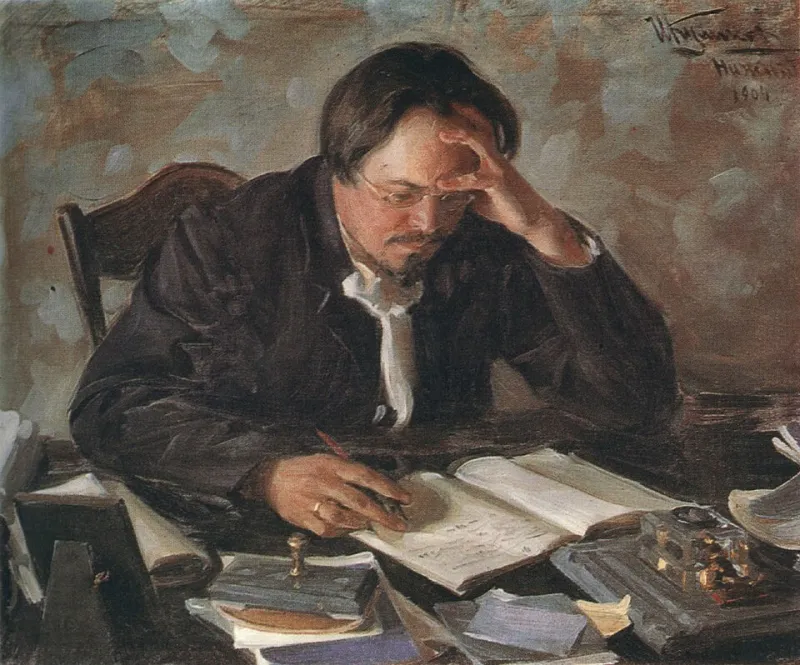
Photo: Ivan Kulikov, Public domain, via Wikimedia Commons
There's a moment many readers recognize but rarely name. It usually happens somewhere in the second half of a book, during a scene that should be genuinely tense. The protagonist is in real danger — or at least, they're supposed to be. But something feels off. The threat doesn't land. The stakes feel decorative rather than real. And by the time the character walks away unscathed (again), the reader has already started to emotionally check out.
What happened? The story ran into plot armor.
For anyone unfamiliar with the term: plot armor is the informal label for when a character survives or succeeds not because of anything earned within the narrative logic, but because the author clearly isn't willing to let them fail. It's protection that comes from outside the story — from the writer's attachment to the character, from series obligations, from market pressure, from fear of upsetting readers. Whatever the cause, the effect is the same: the narrative flinches, and the reader feels it.
Why It Happens (And Why It's Hard to Avoid)
Let's be fair here. Plot armor doesn't usually come from laziness. It comes from love.
Writers spend months or years with their characters. They know exactly how those characters think, what they're afraid of, what makes them laugh. By the time a manuscript is finished, the relationship between author and protagonist can feel almost personal. And that closeness is actually a craft asset — it produces richly drawn, emotionally resonant characters.
The problem is that love can become protective in ways that undermine the story. When a character faces a situation that should logically result in serious harm, loss, or failure, the writer sometimes finds a way around it. A convenient rescue arrives. An enemy makes an inexplicable mistake. The injury that should have been catastrophic turns out to be minor. The character loses something, sure — but nothing they can't recover from before the next chapter.
Individually, any one of these moments might be defensible. Stacked together, they form a pattern. And readers are remarkably good at recognizing patterns, even when they can't articulate what's bothering them.
The Difference Between Safe and Earned
Here's the thing that makes this complicated: not every protagonist survival is plot armor. Characters are supposed to survive most of what happens to them — that's how stories work. The question isn't whether the character makes it through, but whether their survival feels true.
Earned survival has a texture to it. The character uses skills they've actually demonstrated. They make a decision that costs them something, even if it saves them in the moment. The threat was real, and the escape was specific — not generic or conveniently timed. Afterward, the character (and the reader) feels the weight of what just happened.
Plot armor survival feels frictionless by comparison. The character gets out because the narrative needed them to get out. There's no cost, no residue, no sense that anything was genuinely at risk. The scene moves on quickly, as if the story itself is a little embarrassed by what just happened.
Think about the difference between a character who survives a confrontation because they've spent three chapters learning to read a specific opponent's weaknesses — versus a character who survives because their enemy trips at the crucial moment. Both outcomes are technically possible. Only one of them feels honest.
When Protection Actually Serves the Story
Before we go further, it's worth acknowledging that there are legitimate reasons to keep certain characters safe, at least temporarily. Not every story is built around mortality and consequence. Cozy mysteries, romantic comedies, middle-grade adventures — these genres operate with different contracts between writer and reader. The audience isn't there for brutal realism. They're there for something else, and keeping the protagonist reliably intact is part of the deal.
Series fiction also creates genuine structural challenges. If you're writing book three of a planned seven-book arc, you can't kill your protagonist in chapter eight. That's not plot armor — that's genre architecture. The craft question becomes how to generate real tension within those constraints, which is its own interesting problem.
The issue arises when a writer is aiming for genuine stakes — when the story is clearly trying to be emotionally serious, when it wants the reader to believe the danger is real — but then keeps pulling punches anyway. That's the mismatch that breaks trust.
What It Costs the Reader
When readers sense plot armor, the first thing they lose is tension. If a character demonstrably cannot be seriously harmed, there's no reason to feel anxious on their behalf. Action sequences become spectacle rather than suspense. Confrontations feel choreographed. The reader watches from a safe emotional distance instead of leaning in.
The second thing they lose is respect for the character. Ironically, over-protecting a protagonist can actually make them less compelling. Characters reveal themselves under pressure — their values, their limits, their capacity for growth. A character who never truly loses anything never has to reckon with themselves in a meaningful way. They can stay comfortable, and comfortable characters are rarely the ones readers remember.
The third casualty is the story's world. If the rules of that world don't apply equally to everyone — if the protagonist gets a quiet exemption from consequences that other characters face — the whole fictional reality starts to feel arbitrary. Why should anything matter if the outcome is pre-determined?
Practical Questions for Writers
If you're working on something and wondering whether you've crossed the line, a few honest questions can help:
Would this outcome happen to a character you cared less about? If a secondary character in the same situation would have been seriously hurt or killed, and your protagonist walks away clean, that asymmetry is worth examining.
Is the survival specific or generic? A character who escapes because of a particular skill, relationship, or decision they made earlier in the story feels earned. A character who escapes because something convenient happened feels protected.
What did it cost? Real survival usually takes something. Even if the character lives, do they carry any mark from the experience? Loss, injury, changed relationships, moral compromise — something should shift.
Are you avoiding this because it would hurt the character, or because it would hurt the story? Sometimes the painful outcome is actually the right one narratively. Protecting the character from it might mean protecting the story from its own truth.
The Harder, Better Choice
Letting characters genuinely struggle — and sometimes genuinely lose — is one of the more demanding things a writer can do. It requires trusting the reader to stay engaged even when things go badly. It requires trusting the story to survive its own difficult moments.
But the writers whose work endures tend to be the ones who made that harder choice. The scenes readers talk about for years aren't usually the ones where the protagonist got away clean. They're the ones where something real happened — where the cost was visible, where the character had to become someone different in order to survive, or didn't survive at all.
That's not cruelty for its own sake. That's what it looks like when a writer trusts their story enough to let it be true.