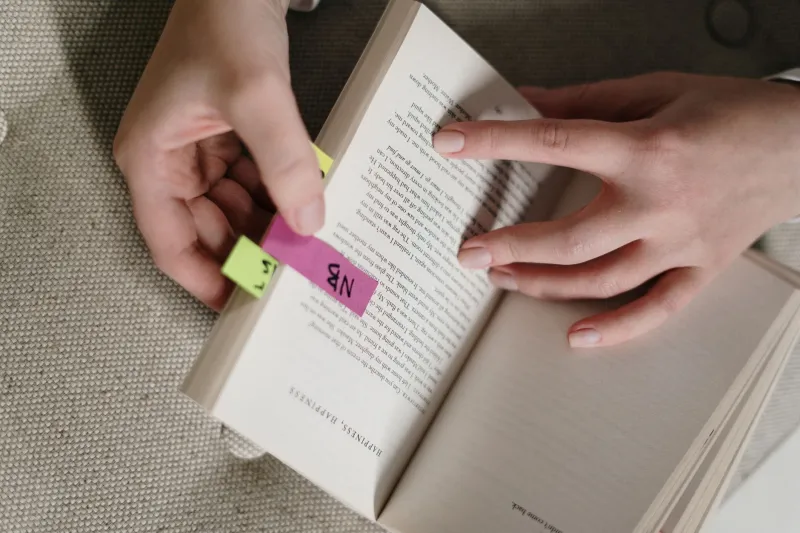
Still Reading Like You're Seventeen: The Hidden Cost of Never Updating Your Literary Identity

There's a particular kind of comfort in knowing exactly what you like. You walk into a bookstore — or open an app, let's be honest — and you go straight to your section. Fantasy. Thrillers. Romance. Literary fiction. You know the drill. You've known it for years.
But here's the question worth sitting with for a second: When did you actually decide that?
For a lot of readers, the honest answer is somewhere between middle school and their mid-twenties. A teacher recommended something that cracked the world open. A friend handed over a paperback with a bent spine and said, "just trust me." A rainy weekend with nothing else to do turned into a three-book binge that rewired something. Those early reads were formative — genuinely, meaningfully formative. But formative doesn't mean permanent. And somewhere along the way, a lot of us stopped treating our reading tastes as something that could keep growing.
The Comfort Zone Has a Paper Trail
Pull up your reading history from the last two or three years. If you use Goodreads, StoryGraph, or even just your library app's checkout log, the data is right there. What do you see?
Chances are there's a pattern — and it's probably tighter than you'd expect. Same genre. Same emotional register. Same general vibe. Maybe even the same handful of authors cycling through on repeat. That's not a criticism. Patterns exist because they work. But they also have a way of calcifying without you noticing.
The psychologists call this mere exposure effect — the tendency to prefer things simply because they're familiar. It shows up everywhere in human behavior, and reading is no exception. The more you read in a particular genre, the more fluent you become in its conventions, and the more satisfying those conventions feel. The problem is that fluency can quietly become a ceiling. You're not discovering anymore. You're confirming.
Who Were You When You Picked That Genre?
Think about the version of you that first fell hard for whatever you're still reading now. What were you dealing with? What did you need from a story?
Maybe you were a teenager who needed fantasy because reality was a lot and magic was a reasonable escape. Maybe you were going through a breakup and romance novels were doing actual emotional labor. Maybe you were a college kid who picked up literary fiction because it felt serious and you wanted to feel serious too. Those were real reasons. They made complete sense at the time.
But you're not that person anymore. You've had different experiences, different losses, different moments of joy and confusion and clarity. The things you're curious about have shifted. The questions you carry have changed shape. And there's a decent chance your reading life hasn't fully caught up.
This isn't about abandoning what you love. It's about asking whether what you love is still serving the person you actually are — not the person you were when you first picked it up.
The Audit Nobody Thinks to Run
Here's something worth trying: do a quick audit of your last fifteen to twenty reads. Not to judge yourself, but to get genuinely curious. Ask a few honest questions.
How many of those books challenged something you already believed? How many introduced you to a perspective, a culture, a historical moment, or a way of thinking that was actually unfamiliar? How many made you uncomfortable in a productive way — the kind of discomfort that comes from encountering an idea you hadn't considered before?
If the answers are mostly "not many," that's useful information. It doesn't mean your reading life is broken. It means there might be more territory available to you than you've been exploring.
The flip side is also worth noting: if you do find variety in your recent reads, if you've been genuinely stretching and experimenting, that's worth acknowledging too. Intentional reading doesn't get enough credit.
The Resistance Is Real (And Worth Naming)
Let's be fair about something: venturing outside your established reading identity isn't always a smooth experience. You pick up a genre you've written off for years, and the first fifty pages feel awkward. The conventions are unfamiliar. You don't know what you're supposed to care about yet. It can feel like arriving late to a party where everyone else already knows each other.
That friction is normal. It doesn't mean the book is bad or the genre isn't for you. It usually just means you're early in building fluency. Most readers who eventually love literary fiction, or narrative nonfiction, or translated novels, or whatever the category is — they didn't love it immediately. There was a learning curve. The readers who stuck with it did so because they gave themselves permission to be a beginner again.
That's actually the harder part. Being a beginner is uncomfortable when you've gotten good at something. There's a real ego cost to not knowing what you're doing. But that discomfort is also where growth lives, and it applies just as much to reading as it does to anything else.
One Practical Move
You don't have to overhaul your entire reading life at once. That kind of dramatic reset rarely sticks anyway.
Instead, try this: for every four or five books you read in your comfort zone, add one that genuinely surprises you. Not a book you feel obligated to read, not something you think you should like — something that just looks interesting in a way you can't quite explain. Follow that instinct somewhere new.
Ask someone whose taste you respect but whose reading life looks nothing like yours. Browse a best-of list from a publication you don't usually read. Pick up a debut novel from an author whose background is completely different from yours. Let curiosity do a little more of the steering.
The Reader You Could Still Be
Here's what's actually exciting about all of this: your reading life isn't finished. Not even close. There are entire genres, traditions, and voices out there that could genuinely change how you see things — and they're just sitting there, waiting.
The bookmark you never updated isn't a failure. It's just a reminder that you got comfortable. And comfortable is fine, right up until it starts costing you the chance to keep becoming someone new.
The best readers aren't the ones who found their genre and stayed loyal to it forever. They're the ones who kept asking what else was out there — and then actually went looking.