When the Story Just Stops: Living With a Series That Never Got Its Ending
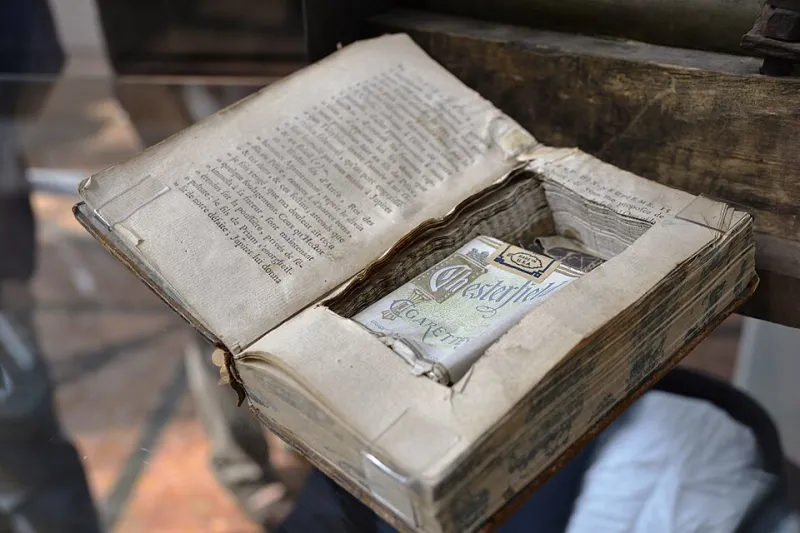
Photo: High Contrast, Public domain, via Wikimedia Commons
There's a particular kind of grief that book readers don't talk about enough. It's not the grief of a character dying or a story ending badly. It's the grief of a story that simply... doesn't end. The series that went quiet after book two. The trilogy where the third installment never came. The author who moved on, burned out, or disappeared into other work while readers were still waiting at the edge of their seats.
If you've ever loved a series that got left behind, you know exactly what this feels like. And if you're new to it — well, welcome. It happens more than you'd think.
The Numbers Are Kind of Staggering
When you start paying attention, unfinished series are everywhere. Some authors announce hiatuses. Others just go silent. A few have passed away before completing their work, leaving fans in the strange position of grieving both the person and the story they'll never get to finish. Patrick Rothfuss has been working on the third Kingkiller Chronicle book for over a decade. George R.R. Martin's Winds of Winter has become something of a cultural punchline at this point, even as millions of readers genuinely ache for it.
But it's not just the mega-famous cases. Plenty of mid-list fantasy, sci-fi, and literary series quietly stall out every year. Sometimes publishers pull the plug. Sometimes authors lose the contract, lose the momentum, or lose the love for the world they built. Sometimes life just intervenes in ways that make finishing a book impossible.
None of that makes it easier for the reader holding book one in their hands, wondering if it's even worth starting.
What's Actually Going On With the Author
Here's something worth sitting with: writing a long series is genuinely brutal work. The first book often gets written in a kind of creative fever — the world is new, the characters feel alive, the whole thing has momentum. By book three or four, the author has been living in the same fictional universe for years, sometimes a decade or more. The pressure from publishers, from fans, from social media, from their own internal standards can become overwhelming.
Creative burnout in long-form fiction is real and it's documented. Authors aren't machines. They're people who started with an idea they loved and sometimes end up trapped by their own success, unable to write freely because the stakes feel impossibly high. When every sentence you put down will be scrutinized by millions of passionate fans, the blank page stops being an invitation and starts being a threat.
That context matters. It doesn't fix the frustration, but it reframes it. The author who hasn't delivered book five isn't necessarily lazy or indifferent. They might be struggling in ways that aren't visible from the outside.
But What About What Readers Deserve?
Okay, here's where it gets complicated.
Readers invest real things in a series. Time, obviously. But also emotional energy, money, mental real estate. You learn the rules of a fictional world. You care about what happens to the people in it. You make promises to yourself — I'll find out how this ends — that the author's silence quietly breaks.
So do readers have the right to be upset? Absolutely. Do readers have the right to demand an ending? That's trickier.
There's a version of fan entitlement that crosses a line — the kind that turns into harassment, that treats authors like content-delivery systems rather than human beings. That version isn't okay, and most thoughtful readers know it. But there's also a version of disappointment that's completely legitimate, that doesn't need to be policed or minimized. You're allowed to feel let down. You're allowed to say, out loud, that you wish the story had been finished.
What you're probably not owed, in any legally or morally binding sense, is the ending itself. Authors aren't under contract with their readers the way they're under contract with publishers. That's just the reality of how creative work functions.
Finding Something Real in an Incomplete Story
Here's the question that actually matters for your own reading life: what do you do with a story that stopped?
One option is to reframe what the existing books are. If a trilogy stalls after book two, those two books still exist. The world-building is still there. The relationships, the themes, the imagery — none of that disappears because book three never showed up. Some of the most powerful reading experiences in literary history involve incomplete works. Kafka never finished The Trial or The Castle. Dickens died before completing The Mystery of Edwin Drood. We still read them. We still get something from them.
Another option is to get comfortable with ambiguity. American readers — honestly, most Western readers — are trained to expect narrative closure. Beginning, middle, end. Resolution. But some of the most interesting stories resist that structure, and learning to sit with an open ending can actually expand the way you engage with fiction overall.
You can also, gently, let yourself move on. This sounds obvious, but a lot of readers hold onto the idea of an unfinished series like a wound they keep reopening. Checking for updates, revisiting forums, keeping the books on a mental to-do list. At some point it's worth asking: is waiting for this ending serving you? Or is it just a habit?
The Books That Did Get Finished
There's something worth saying for the authors who push through. Who deliver the ending even when it's hard, even when it's imperfect, even when fans are going to have opinions. Finishing a long series is genuinely difficult, and the authors who manage it deserve credit for that.
And sometimes the ending isn't what you wanted, and that's its own complicated experience. But at least it's there. At least the story got to close.
For the ones that didn't — the worlds that went quiet, the characters whose fates we'll never know — maybe the best we can do is hold them the way we hold a lot of things in life that didn't finish the way we hoped. With some sadness, some genuine appreciation for what we did get, and enough self-awareness to know when it's time to pick up something new.
The next great series is out there. It might even get finished.