You Heard Every Word — But Did You Actually Read It?
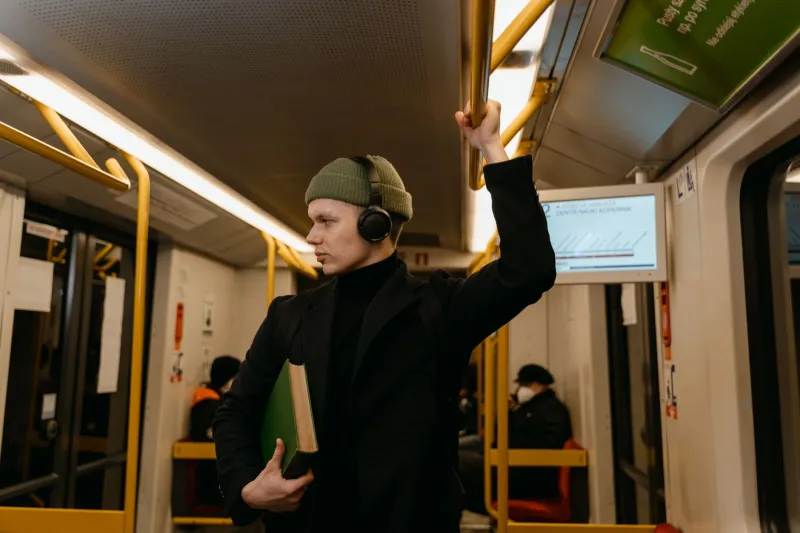
Let's get the awkward part out of the way first. You've probably been in this situation — someone asks if you've read a particular book, and you say yes, even though you technically listened to it during your morning commute while also half-watching traffic and mentally drafting a grocery list. It felt like reading. It counted, right?
Maybe. But also maybe not entirely — and that tension is worth sitting with for a minute.
Audiobooks aren't going anywhere. According to the Audio Publishers Association, the US audiobook market has seen double-digit growth nearly every year for the better part of a decade. More people are "reading" than ever before, if we use the loosest possible definition of the word. That's genuinely great news for books and for storytelling. But it's also opened up a conversation that the literary world has been dancing around without quite committing to: when narration does the heavy lifting, what actually changes about the experience?
The Narrator Is Already Doing the Interpretation for You
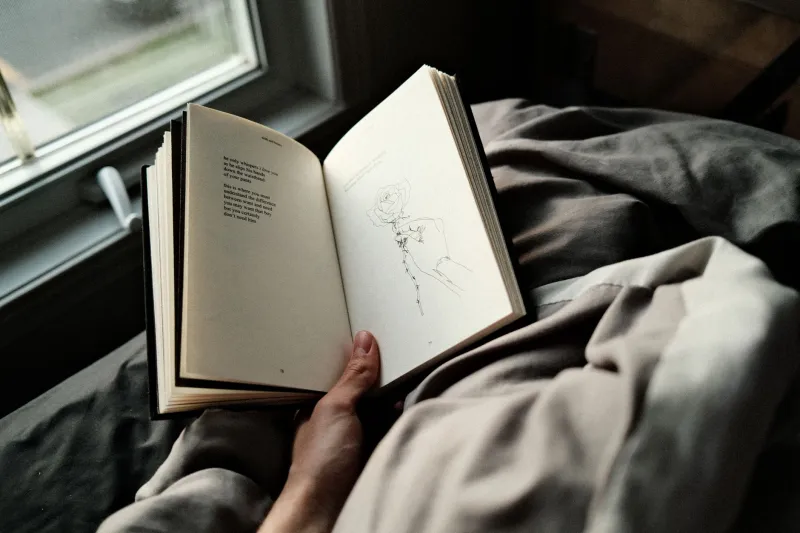
Here's something print readers rarely think about — when you read silently, your brain is performing a quiet act of creative collaboration with the author. You assign voices. You set the pace. You decide whether a line of dialogue is sarcastic or sincere. That interpretive work is yours, and it shapes the story you ultimately carry around in your head.
An audiobook narrator takes all of that off your plate.
A skilled narrator — think the late Frank Muller's legendary run on Stephen King, or Bahni Turpin's work on The Hate U Give — can make a book feel richer and more alive than the page alone might deliver. There's a case to be made that certain stories genuinely benefit from a performed reading. But that performance also closes doors. When a narrator gives a character a specific voice, that's the voice you get. The emotional coloring they bring to a tense scene? That's the emotional coloring you receive. The reader's role shifts from co-creator to audience member.
That's not inherently bad. It's just different. And different matters when we're talking about comprehension and memory.
Your Brain on Audio (While Also Doing Everything Else)
Research on this is genuinely interesting, even if it doesn't deliver a clean verdict. Studies from institutions like UC Berkeley and various cognitive science journals have found that reading and listening activate overlapping but distinct neurological processes. Both can produce deep comprehension under the right conditions. The catch is that phrase: the right conditions.
Print reading, by its nature, demands a kind of physical stillness and focused attention that audio doesn't require. You can't easily skim an audiobook. But you can absolutely zone out for three minutes, catch a fragment of a sentence, and convince yourself you've been tracking the whole time. The multitasking culture that makes audiobooks so appealing — you can "read" while driving, cooking, running — is also the thing that most consistently undermines retention.
When researchers actually test comprehension after listening versus reading, the results tend to favor reading for complex, densely structured material. For narrative fiction with a strong plot drive, the gap narrows considerably. But ask someone to recall specific details, thematic nuances, or the precise emotional arc of a secondary character three weeks later, and print readers generally have an edge.
That said, there are real populations — people with dyslexia, visual impairments, or demanding physical jobs — for whom audiobooks aren't a compromise but a lifeline to literature they might otherwise never access. That context matters enormously, and any honest discussion of "does listening count" has to hold space for it.
The Conversation Problem
Here's where things get socially complicated. Book clubs, online reading communities, and literary conversations generally assume a shared baseline — that everyone engaged with the text in roughly the same way. When half the group listened and half read, those baselines quietly diverge in ways that don't always surface until someone says, "Wait, I completely missed that detail" or "I didn't realize that passage was even in there."
Pacing is a huge part of this. A print reader controls their own tempo — they can linger on a paragraph, flip back two pages, or race through a chapter in a single sitting. An audiobook listener surrenders that control to the narrator and, often, to the demands of their schedule. A chapter that took one listener twenty minutes while commuting might have taken a print reader an hour of slow, deliberate engagement. Those are meaningfully different experiences of the same text.
Narrator speed, tone, and emphasis can also shift which moments register as significant. A print reader might breeze past a line of dialogue, while a narrator's deliberate pause turns it into a pivotal beat. Two people who "read" the same book can walk away with surprisingly different mental maps of what mattered.
Neither Format Is the Enemy
None of this is an argument that audiobooks are lesser — that framing misses the point entirely. What it is, honestly, is a call to be more curious about what we mean when we say we've read something.
If you listened to Demon Copperhead on a long road trip and it wrecked you emotionally, that's a real and valid literary experience. If you've been working through The Power Broker chapter by chapter on headphones because the print edition is roughly the size of a small child, more power to you. But if you're walking into a conversation about Demon Copperhead and claiming the same depth of textual familiarity as someone who spent two weeks with the hardcover, it might be worth a small, internal asterisk.
The more interesting question isn't "which format is better" — it's "what kind of reader do I want to be, and what am I actually getting out of this?"
Sometimes you want to be swept along by a great narrator's performance. Sometimes you want the slow, solitary intimacy of words on a page that move only when you move them. Both of those things are worth having. They just aren't quite the same thing.
What This Means for How We Talk About Books
As audiobooks continue to grow, the literary conversation is going to have to get more comfortable with this ambiguity. Maybe that means being upfront about format when discussing books — not as a gatekeeping measure, but as a useful piece of context. "I listened to it" carries different information than "I read it," the same way "I saw the movie" carries different information than "I read the book."
None of it disqualifies the experience. It just describes it more honestly.
And honestly? That kind of precision seems worth something in a world where books — however you encounter them — still have the power to change how you think.