Notes in the Margins: How Footnotes Became the New Narrative Layer

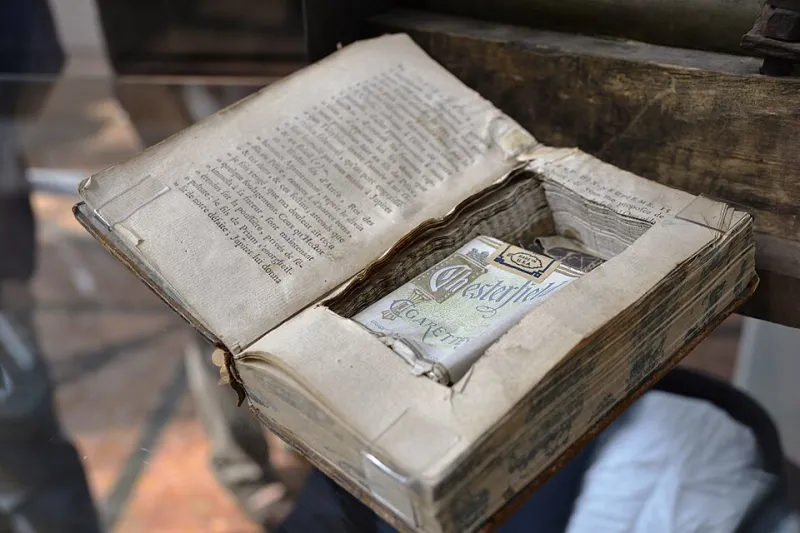
Photo by Photo by Afonso Azevedo Neves on Unsplash on Unsplash
There's a moment that happens when you're deep into a book and you hit a little superscript number — a tiny flag planted in the text. Old instinct says skip it. Academic reflex says groan. But something has shifted in recent years, and that little number has started to feel less like an interruption and more like an invitation.
Welcome to the footnote renaissance. It's weird, it's wonderful, and it's quietly changing the way stories get told.
From the Academy to the Bookshelf
For most of literary history, footnotes were the domain of scholars, lawyers, and the kind of writers who really wanted you to know they did their research. They were functional, dry, and mostly invisible to anyone reading for pleasure. You'd find them in textbooks, legal briefs, and the occasional dense historical biography — not exactly the stuff of page-turning fiction.
But somewhere along the line, authors started playing with that expectation. They noticed that the footnote occupied a strange, liminal space on the page — technically part of the text, but also somehow outside it. A voice that could comment on the story without being in the story. That's a pretty powerful position when you think about it.
David Foster Wallace is probably the most famous culprit here. His footnotes in Infinite Jest weren't asides — they were entire narrative threads, character studies, and philosophical rabbit holes. Some readers resented the interruption. Others found that the footnotes were where the real action lived. Either way, nobody could ignore them.
The Authors Who Made Annotation Interesting
Wallace wasn't alone, and he certainly wasn't the end of the experiment. In the years since, a growing number of writers have leaned into the footnote as a genuine creative tool rather than a stylistic quirk.
Terry Pratchett used footnotes throughout his Discworld series as a kind of running comedy track — a second voice that punctured pomposity and delivered some of his sharpest jokes. Readers who skipped the footnotes got a perfectly good story. Readers who didn't got a richer, funnier one. That layering was intentional, and it rewarded the people paying close attention.
Mark Z. Danielewski's House of Leaves took things further, building an entire architecture of annotations, appendices, and editorial notes that functioned as a kind of horror in themselves. The structure was the story. The more you dug into the layers, the more unsettled you became — not because of any single plot point, but because the text itself felt unstable.
More recently, authors like Susanna Clarke (Jonathan Strange & Mr Norrell) and Naomi Novik have used footnotes to build out fictional worlds with a kind of documentary texture, making their invented histories feel genuinely researched and lived-in. The footnotes don't just support the story — they convince you the story is real.
Why Readers Are Actually Into This Now
Here's the interesting part: this stuff is landing differently than it used to. And a big reason for that is how we consume content in 2024.
Anyone who spends time on social media is already navigating layered information constantly. You read a post, you check the comments, you follow a link, you come back. You're used to a main feed with a whole ecosystem of context running alongside it. Footnotes, in a weird way, map onto that experience pretty naturally. They're the comments section of the novel. The QT thread. The explainer tab you open in the background.
There's also a growing appetite for books that feel genuinely interactive — not in the choose-your-own-adventure sense, but in the sense that they reward engagement. Readers who grew up with video games, wikis, and fan communities are comfortable with the idea that a story has layers, and that digging into those layers is part of the fun. A footnote that pays off is basically an Easter egg. And people love Easter eggs.
The Marginalia Effect
It's not just footnotes, either. The broader trend is toward what you might call the marginalia aesthetic — the sense that a text has been lived in, annotated, argued with. Publishers have caught on. Annotated editions of classic novels have become a genuine market. Books that include fictional reader commentary as part of the story — like the fake scholarly apparatus in Vladimir Nabokov's Pale Fire — are getting fresh attention from readers who might have found them impenetrable a decade ago.
There's also something happening with physical books specifically. In an era when a lot of reading has migrated to screens, the footnote is one of the things that feels distinctly, pleasurably bookish. The physical act of glancing down to the bottom of the page, losing your place, finding it again — that's a tactile experience tied to the object in your hands. It's one of the small reasons print isn't going anywhere.
What Writers Can Learn From This
If you're a writer thinking about your own work, the footnote conversation is worth paying attention to — not because you should start cramming annotations into everything, but because it points toward something important about reader engagement.
The most successful uses of footnotes and marginalia share a few things in common. They're purposeful — the annotation adds something the main text can't do on its own, whether that's a second voice, a different time frame, or a layer of irony. They're rewarding — the reader who engages with them gets something extra. And they respect the reader's intelligence — they don't over-explain or condescend.
The worst uses of footnotes are the ones that feel like the author couldn't make a decision and punted. The endnote that just restates what the paragraph already said. The aside that interrupts the flow without adding anything. Those are the footnotes that earned the annotation its bad reputation in the first place.
Done right, though? A footnote can be the most memorable line in the book.
The Story Below the Story
What the footnote renaissance is really telling us is that readers are hungry for depth — for texts that have more going on than the surface. They want to feel like they're in a conversation with the author, not just receiving a transmission. They want the sense that there's always a little more to find if they look.
That's not a new desire. But the tools we have for satisfying it — and the cultural fluency readers bring to layered, non-linear information — are newer than they've ever been. The footnote just happens to be an old format that fits a very current appetite.
Next time you hit that little superscript number, don't skip it. The author put something down there for a reason. And if they did their job right, it might be the best part of the page.