Quitting a Book Might Be the Most Honest Thing You Ever Do as a Reader
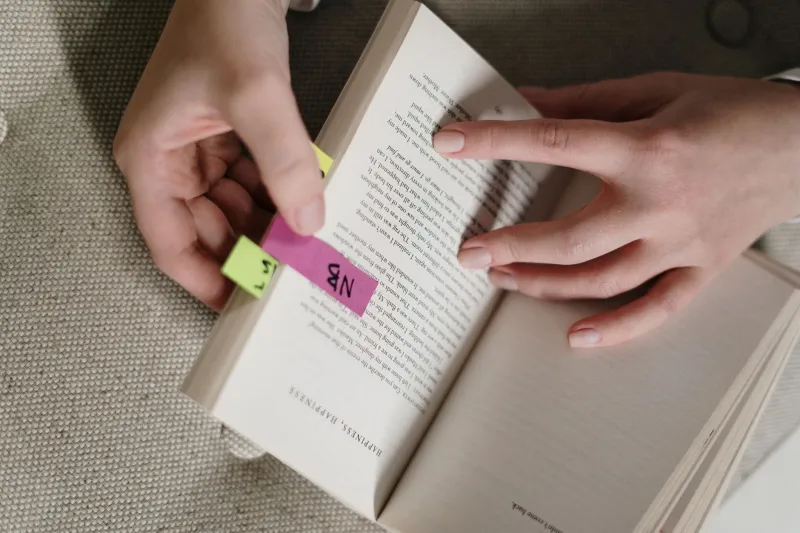
There's a specific kind of guilt that comes with setting a book down and not picking it back up. You know the feeling — the bookmark sitting somewhere around page 80, the spine staring at you from the nightstand, the quiet internal negotiation that starts with maybe tomorrow and eventually becomes maybe never. In reading culture, especially online, not finishing a book carries a weird social weight. Like you owe the author something. Like you failed.
But here's the thing: your DNF list — all those Did Not Finish books piling up in your Goodreads shelf or stacked on your floor — might actually be the most truthful document of your reading life. More honest, even, than the books you loved.
The Books You Finish Aren't Always the Books You Chose
Think about the last book you powered through even when you weren't feeling it. Maybe it was a book club pick. Maybe a friend handed it to you with that look — the one that says this changed my life, please validate me. Maybe it was critically acclaimed and you felt like you should appreciate it. So you kept going. You finished it. And maybe you even gave it three stars and wrote a diplomatic little review.
But did you actually choose that experience? Or did social pressure, obligation, or sunk-cost thinking make the decision for you?
The books we abandon don't have that noise around them. When you put something down at chapter four with zero intention of returning, that's a clean signal. Nothing external is pushing you to stay. The book just... didn't hold you. And that's data.
What Your DNF List Is Actually Tracking
If you go back and look at the books you've quit over the years, patterns emerge fast. Maybe you always bail on slow-burn literary fiction when you're going through a stressful period at work. Maybe you can't get through anything with an unreliable narrator when you're already feeling emotionally wrung out. Maybe you've abandoned three books in a row by authors who over-explain their world-building in the first fifty pages, which tells you something clear about your tolerance for that kind of pacing.
Your DNF list is essentially a log of your reading conditions — what you need from a book at different moments in your life, what you simply can't give your attention to, and where your actual limits are. That's not failure. That's self-knowledge.
Life circumstances play a huge role here too. A book you quit during a cross-country move might have been genuinely great — just wrong for that chaotic window. A thriller you abandoned after three chapters during a period of anxiety might have been too close to the emotional temperature you were already living at. Context shapes everything, and your DNF list captures context in a way your favorites shelf never quite does.
The Myth of the Obligated Reader
Somewhere along the way, a lot of us absorbed this idea that starting a book creates a contract. That the author put in the work, so you owe them your attention all the way through. It's a generous instinct, honestly. But it doesn't really hold up.
Reading isn't a transaction. You're not a passive recipient of someone's effort — you're an active participant in creating meaning from a text. And if that meaning isn't coming together for you, if the story isn't meeting you where you are, walking away isn't disrespect. It's honesty.
The best readers aren't the ones who finish everything. They're the ones who know what they're actually looking for.
When Quitting Is a Form of Growth
Here's something worth sitting with: the books you abandon often mark turning points. There's a version of you that would have pushed through a certain kind of book — maybe because you wanted to seem well-read, or because you hadn't yet trusted your own taste enough to bail. And then there's the version of you that puts it down without apology.
That second version knows something the first one didn't.
A lot of readers describe their DNF moments as small acts of reclaiming their reading life. Especially after years of assigned reading in school, where finishing was literally graded, giving yourself permission to stop is a kind of decompression. You're reminding yourself that reading is something you do for your own reasons — curiosity, pleasure, growth, escape — not to check a box.
And once you start treating quitting as a legitimate option, something interesting happens: the books you do finish start to feel more meaningful. You're there because you chose to be, not because you felt trapped.
The Difference Between Quitting and Giving Up
There's a nuance worth naming here. Sometimes a book is slow to start and genuinely rewards patience — and there's a real difference between bailing too early and recognizing that something isn't working for you. Only you can make that call, and it usually involves some honest self-interrogation.
Are you putting this down because it's genuinely not clicking, or because it's asking something of you that feels uncomfortable right now? Sometimes discomfort is exactly what good reading is supposed to feel like. A challenging book that's making you work isn't the same as a book that's simply not for you.
But here's the thing — you get to make that distinction. No one else can. And learning to tell the difference is part of developing real reading instincts.
Using Your DNF List Going Forward
If you've never actually looked at your abandoned books as a collection, it's worth doing. Pull them up, scroll through, and ask yourself a few things: What do they have in common? What were you going through when you quit each one? Are there any you'd genuinely want to revisit now that circumstances are different?
You might find that your DNF list is a better guide to your next great read than any algorithm or bestseller list. It tells you what doesn't work for you — which, by process of elimination, gets you a lot closer to what does.
The books we abandon aren't the ones we failed. They're the ones that asked us to be someone we weren't, at a moment when we finally stopped pretending we were. That's not a loss. That's actually kind of a win.